
Meta Description:
Looking for the best real estate investing tips? Learn smart strategies, beginner-friendly advice, risk management, financing methods, and property selection tips to grow in real estate investing.
Real Estate Investing Tips: A Complete Guide for Beginners and Smart Investors
Real estate investing tips are important for anyone who wants to build wealth, create passive income, and make smart property decisions. Whether you are a beginner or someone with a little experience, understanding the right real estate investing tips can help you avoid mistakes and improve your returns. Real estate is one of the most popular ways to grow money because it offers long-term appreciation, rental income, and portfolio diversification.
In today’s market, following the right real estate investing tips is more important than ever. Property prices, rental demand, location trends, financing options, and maintenance costs all affect your investment success. If you enter the market without proper knowledge, you may face losses, bad tenants, or poor property choices. But if you use smart real estate investing tips, you can make better investment decisions and build a profitable portfolio over time.

Why Real Estate Investing Is Popular
Real estate investing has become popular because it offers multiple ways to earn returns. Investors can earn through rental income, resale profits, appreciation, and even commercial leasing. Unlike some other investments, real estate is a physical asset. Many people feel more secure investing in something tangible like land, apartments, homes, or office spaces.Contact
Another reason people search for real estate investing tips is that real estate can provide long-term financial stability. When done correctly, investing in real estate helps generate steady monthly cash flow and build assets that increase in value over time.
Understand Your Investment Goal First
Before buying any property, one of the most important real estate investing tips is to define your investment goal. Ask yourself why you want to invest.
Short-Term Goal
If your goal is short-term profit, you may focus on buying undervalued properties and selling them after renovation. This strategy is often called flipping.
Long-Term Goal
If your goal is long-term wealth building, then rental properties may be the better option. These properties can provide regular monthly income while growing in value over the years.
Passive Income Goal
Some investors simply want passive income. In this case, choosing a property in a high-demand rental area can be a smart move.
Having a clear goal helps you choose the right type of property and strategy. This is one of the most practical real estate investing tips for beginners.
Research the Location Carefully
One of the golden real estate investing tips is: location is everything. A good property in a bad location may perform poorly, while an average property in a prime location may bring strong returns.
Check Nearby Infrastructure
Look for schools, hospitals, shopping centers, public transport, highways, and business hubs. Good infrastructure increases demand.
Study Market Trends
Check whether property prices in the area are rising, stable, or falling. A growing area usually offers better appreciation.
Look at Rental Demand
If you plan to rent out the property, check if people are actively looking for homes or commercial spaces in that area.
Understand Safety and Neighborhood Quality
People prefer safe and clean neighborhoods. These areas often attract better tenants and higher property values.
Among all real estate investing tips, location research is one of the most powerful because it directly impacts rental income and future resale value.
Start with a Budget and Financial Plan
Another important part of real estate investing tips is financial planning. Never invest emotionally. Always invest according to numbers.
Calculate Total Purchase Cost
Your property cost is not only the purchase price. You also need to include:
- Registration and legal fees
- Stamp duty
- Loan processing charges
- Renovation cost
- Broker fees
- Maintenance expenses
Keep Emergency Funds
Unexpected repairs and vacancy periods can happen. Smart investors always keep some emergency money aside.
Check EMI and Cash Flow
If you are taking a loan, calculate whether the rental income can cover EMI and other monthly expenses.
Avoid Overleveraging
Borrowing too much money can be risky. One of the best real estate investing tips is to keep your debt manageable.
Choose the Right Type of Property
Different properties suit different investors. Understanding property type is one of the core real estate investing tips.
Residential Properties
Residential real estate includes flats, independent houses, villas, and rental apartments. These are beginner-friendly because demand is usually stable.
Benefits of Residential Property
- Easier to understand
- High rental demand in cities
- Lower entry barrier compared to commercial property
Commercial Properties
Commercial properties include offices, retail shops, and warehouses. They often offer higher rental yields but may require larger capital.
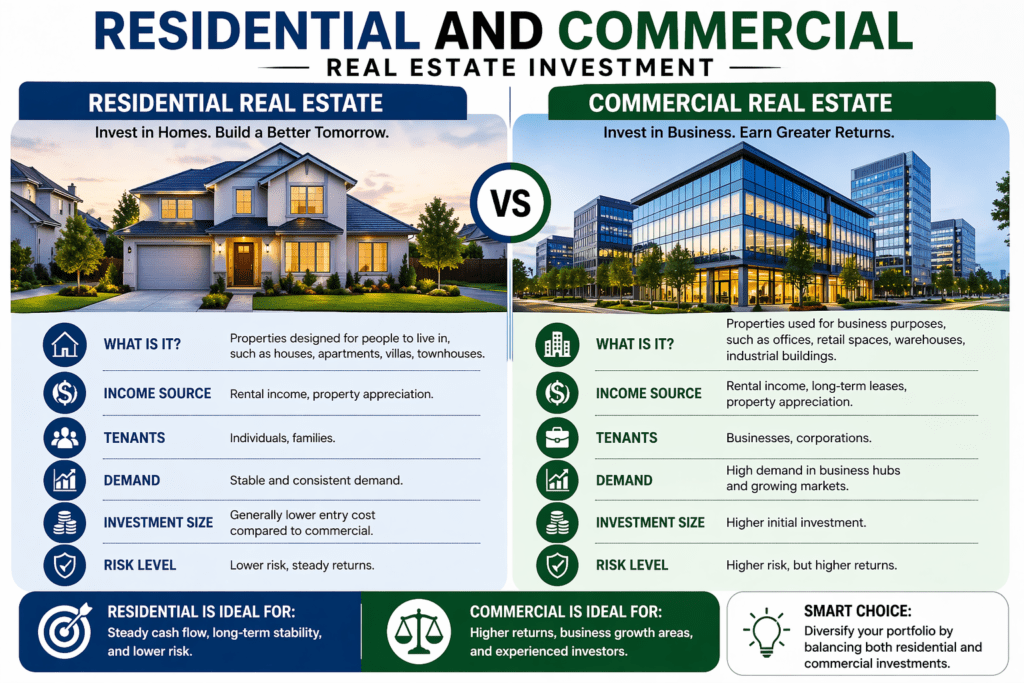
Benefits of Commercial Property
- Higher rent potential
- Longer lease terms
- Business tenants may maintain property better
Land Investment
Buying land can be profitable if the area develops over time. However, land investments often need patience and strong legal verification.https://kisanagriculture.in/
Benefits of Land Investment
- Lower maintenance
- Strong long-term appreciation in growth areas
- Flexible exit opportunities
Choosing the right property type is one of the most practical real estate investing tips because it shapes your investment journey.
Verify Legal Documents Properly
Many investors ignore legal checks, but one of the smartest real estate investing tips is to verify every document before making payment.
Important Documents to Check
- Title deed
- Sale deed
- Encumbrance certificate
- Property tax receipts
- Approved building plan
- Occupancy certificate
- RERA registration, where applicable
Hire a Legal Expert
A property lawyer can help verify ownership and detect disputes or fraud. This small cost can save you from major future losses.
Legal safety is one of the most essential real estate investing tips because a good-looking property means nothing if it has legal problems.
Focus on Rental Yield and Appreciation
Successful investors understand two important return factors: rental yield and appreciation.
What Is Rental Yield?
Rental yield is the annual rental income compared to the property price. It helps you understand how much income the property can generate.
What Is Appreciation?
Appreciation means the increase in property value over time. A property in a growing location may become much more valuable after a few years.
Balance Both
Some locations offer high rental demand but moderate appreciation. Others offer strong appreciation but lower rental yield. The best real estate investing tips suggest balancing both based on your goal.
Inspect the Property Carefully
Never buy a property just by looking at photos or advertisements. One of the most practical real estate investing tips is to physically inspect the property.
Check Construction Quality
Look for cracks, leakage, poor wiring, broken fittings, and low-quality materials.
Review Ventilation and Layout
A property with good sunlight, air flow, and practical layout is more attractive to buyers and tenants.
Evaluate Repair Cost
If the property needs renovation, estimate the total repair budget before buying.
Visit at Different Times
Visit during the day and evening to understand traffic, noise, and neighborhood conditions.
Understand the Local Market
Smart investors do not just buy property; they study the market. One of the top real estate investing tips is to understand local price behavior.
Compare Similar Properties
See how much similar properties are selling for in the same area.
Talk to Local Brokers
A good broker can provide insights on demand, rental trends, and future developments.
Learn Seasonal Trends
Some markets move faster in certain months. Timing can affect negotiation and pricing.
Track Supply and Demand
Too much supply can reduce rental income and slow resale. Strong demand improves investment potential.
Screen Tenants Properly
If you are buying for rental income, tenant quality matters a lot. This is one of the most ignored real estate investing tips.
Check Employment and Income
Reliable tenants usually have stable jobs and regular income.
Verify Identity and References
Take ID proof, address proof, and previous landlord references.
Use a Rental Agreement

A written agreement protects both owner and tenant.
Set Clear Rules
Mention payment date, maintenance responsibilities, and notice period clearly.
Good tenant management supports long-term investment success.
Diversify Your Real Estate Portfolio
Another useful point in real estate investing tips is diversification. Do not put all your money into one property type or one location.
Spread Across Property Types
You can mix residential, commercial, and land investments.
Spread Across Locations
Investing in different localities reduces risk if one market slows down.
Mix Income and Growth Assets
Some properties can generate steady monthly rent, while others can provide long-term capital growth.
Diversification helps protect your portfolio against market fluctuations.
Keep a Long-Term Mindset
Real estate investing usually works best with patience. One of the most valuable real estate investing tips is to avoid expecting instant profit from every property.
Property Value Takes Time to Grow
In many cases, appreciation happens gradually over several years.
Rental Income Builds Wealth Slowly
Monthly income may seem small at first, but over time it adds stability and covers costs.
Market Cycles Are Normal
Real estate markets can move up and down. Long-term investors are better positioned to handle temporary slowdowns.
Use Professional Support
You do not need to do everything alone. One of the smartest real estate investing tips is to work with experts.
Real Estate Agent
A good agent helps you find opportunities and negotiate better.
Property Lawyer
A lawyer helps with legal checks and documentation.
Chartered Accountant or Financial Advisor
A financial expert helps you understand taxes, loan structure, and return calculations.
Property Manager
If you own multiple rental properties, a property manager can handle tenants and maintenance.
Professional support can improve your investment decisions and save time.
Common Mistakes to Avoid
Learning mistakes is an important part of real estate investing tips.
Buying Without Research
Never invest just because someone says it is a good deal.
Ignoring Hidden Costs
Maintenance, repairs, legal fees, and vacancies can reduce profit.
Overpaying for Emotion
Do not buy because you “like” the property. Buy because the numbers make sense.
Skipping Legal Verification
A cheap property with legal issues can become a financial disaster.
Not Planning Exit Strategy
Always think about how and when you may sell or upgrade the investment.
Internal Link Suggestions
Use these as internal links on your website:
- Beginner’s Guide to Real Estate Investment
- How to Analyze a Rental Property
- Best Cities for Property Investment
- Tips for Buying Your First Investment Property
- Residential vs Commercial Real Estate Investment
- How to Calculate Rental Yield
- Common Real Estate Investment Mistakes to Avoid
External Link Suggestions
Use these as external authority links:
- Investopedia – Real Estate Investing Basics
- Forbes – Real Estate Investment Advice
- National Association of Realtors
- World Bank Housing Market Resources
- Local government land records or property registration portal
- RERA official website for your state
FAQs
What are the best real estate investing tips for beginners?
The best real estate investing tips for beginners include setting a clear budget, researching location, checking rental demand, verifying legal documents, and starting with a simple residential property.
How much money do I need to start real estate investing?
The amount depends on the market, property type, and financing method. Some investors start with a home loan and a down payment, while others invest in smaller plots or shared opportunities.
Is real estate investing risky?
Yes, like every investment, real estate has risks. However, following the right real estate investing tips can reduce risk. Good research, legal verification, and financial planning are very important.
Should I invest in residential or commercial property?
Residential property is often better for beginners because it is easier to manage. Commercial property can provide higher returns but may require more capital and market understanding.
Why is location important in real estate investing?
Location affects rental demand, resale value, tenant quality, and future appreciation. That is why location is one of the most repeated real estate investing tips.
Can real estate investing create passive income?
Yes, rental properties can create passive income if they are managed properly and located in high-demand areas.
Conclusion
These real estate investing tips can help you make smarter decisions, reduce mistakes, and build long-term wealth. Real estate investing is not just about buying property; it is about understanding goals, location, legal safety, financing, rental demand, and future growth. If you follow the right real estate investing tips, you can create a strong investment foundation and improve your chances of success.
For beginners, the best approach is to start small, research deeply, and avoid emotional decisions. For experienced investors, improving analysis, diversification, and market timing can lead to even better results. In every case, smart planning is the key. Real estate can be one of the best wealth-building tools when used with patience and strategy.
Image Alt Text Suggestions:
- real estate investing tips for beginners
- best real estate investing tips
- property investment strategy guide
- real estate investor checking property
- smart real estate investing tips
- residential and commercial real estate investment
- rental property investment tips
- real estate market research for investors